Aims
The student understands the utilisation of side and waste streams in fuel production in existing and emerging processes. The student knows the most typical waste streams and their composition and potential in the production of different fuels. The student is able to describe how waste can be used to produce fuels and the different steps in the production process. The student will be able to compare the volume and recovery potential of waste and side streams with current mainstream technologies and understand the environmental and sustainability impacts of waste feedstocks compared to fossil feedstocks.
Contents
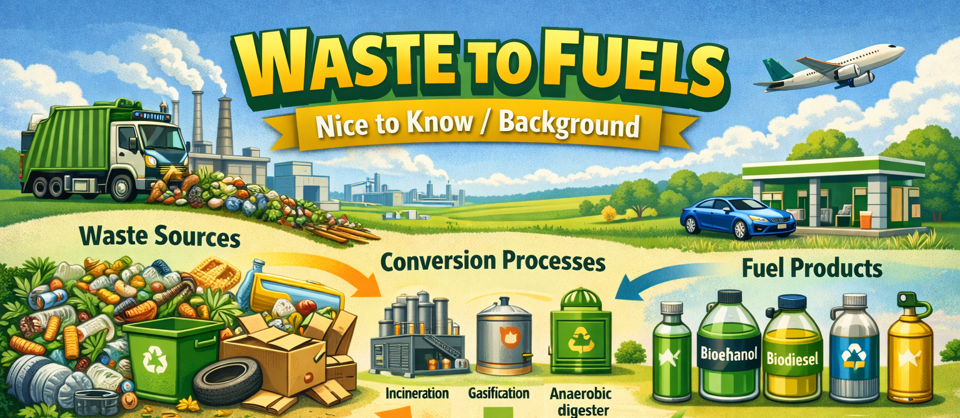
-A comprehensive exploration of waste and side streams, focusing on their properties, challenges, and potential for fuel production. An understanding of first, second, and third-generation biofuels based on their sources. A detailed overview of common key waste-to-energy and waste-to-fuel conversion processes.
-Processing of Triglyceride waste: An introduction to the topic, sources and characteristics of waste oils, processing methods, and an overview of the resulting products and their properties (FAME and HVO).
-Biomass conversion to biogas: Comprehensive overview of converting biowaste to biogas, Exploration of potential raw materials (manure, crops residue, MWS, landfill gas), Key processes such as pretreatment, digestion, purification, storage and utilization.
-Biomass residues and waste processing: Understanding of thermal techniques such as pyrolysis, gasification, Hydrothermal carbonization, Torrefaction for the processing of biomass residue and waste.
-Plastic waste processing: Introduction to mechanical and chemical recycling methods for plastics waste, an overview of different process such as pyrolysis, catalytic cracking, hydrothermal liquefaction of plastic waste, advanced treatment methods, Refining and upgrading recycled plastics to products.
-Future of waste streams: Discussion on potential and challenges in managing emerging waste streams, Importance of circular economy principles and sustainability, Relevance of different technologies for shaping the future of emerging waste streams.
Implementation
The course in Moodle is conducted in English and can be completed independently within the course period, without being tied to a specific time or place. The course consists of materials shared in Moodle (articles, lecture slides, recorded lectures, and other online resources), Moodle assignments, and exercises. All materials, as well as the assignments and exercises to be assessed, are completed and submitted in the Moodle workspace.